A Stone Oven, Not a Bread Machine
Most of what lands on the table starts the same way: dough, water, salt, and a stone deck that's been heating since before service. The oven runs at a temperature no home kitchen reaches, and it's what gives our pide its blistered top and soft, steam-filled centre.
We don't par-bake or hold trays under a heat lamp. Every order goes into the oven when it's ordered, which is why a table's bread sometimes arrives a few minutes after everything else. It's still finishing when the rest of the order is ready.
The Dough We Use, and Why We Don't Change It
The dough rests far longer than most flatbread recipes call for. A slow, cool ferment gives it the open, slightly chewy crumb that holds up to being torn and dragged through a meze plate without falling apart.
It's a recipe we inherited rather than developed, one of the few things on the menu that hasn't been adjusted since the kitchen opened.
What Comes Out Warm
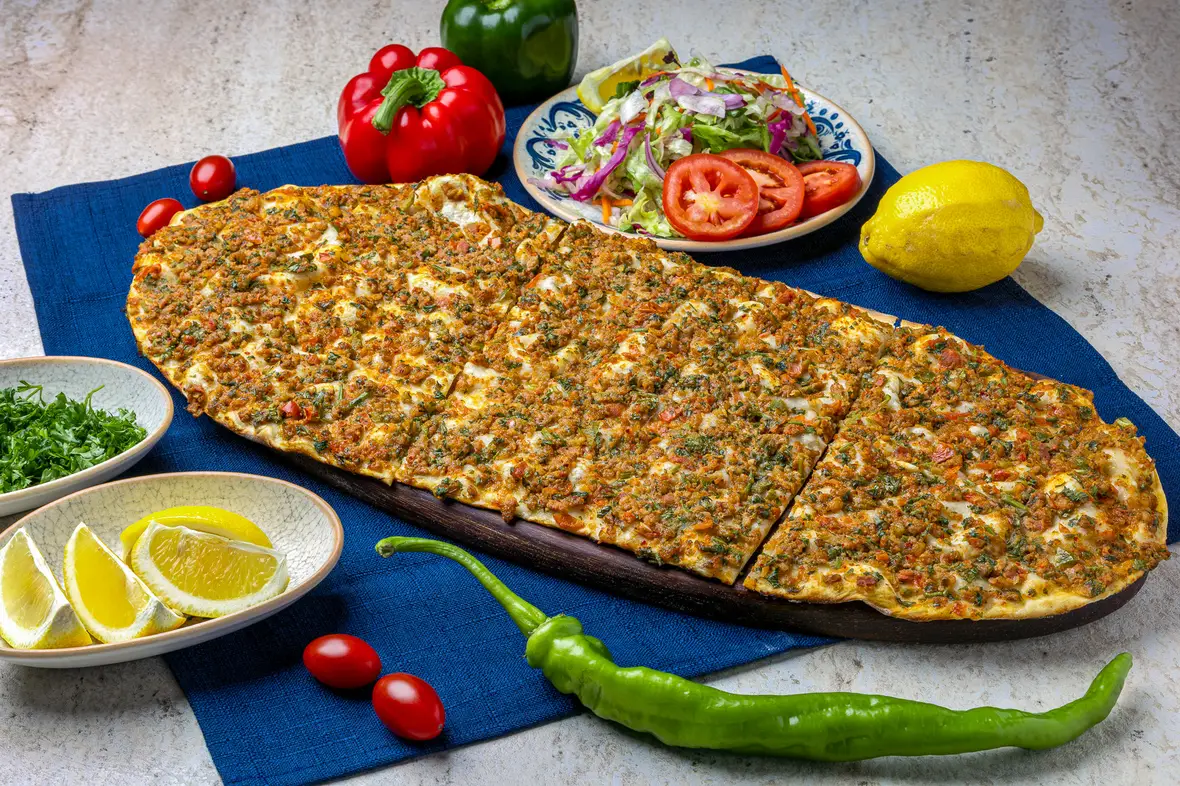
Pide arrives boat-shaped and loaded, lahmacun comes thin and crisp with spiced lamb to the edge, and on weekend mornings, simit rings sit warm in a basket next to the eggs. All three come out of the same oven, just at different points in the day.
The bread basket that opens most tables holds warm pide fingers, simit, and a small dish of oil and spice for dipping. It is usually the first thing to disappear.
Why It's Worth Ordering Extra
Turkish meals are built around sharing, and bread is the utensil half the time. It scoops up hummus, wraps around grilled meat, and mops up the last of a sauce. Running out partway through dinner means someone's plate goes unfinished.
If in doubt, order a second basket when the mains arrive. It reheats worse than it bakes, so timed right, there's rarely any left to save.